

Today I used an other manual lens, the Rico auto Rikenon 55mm f1.4. As far as I can tell the lens is from the 60th, it’s heavy and feels really good in the hand, the focusing ring is 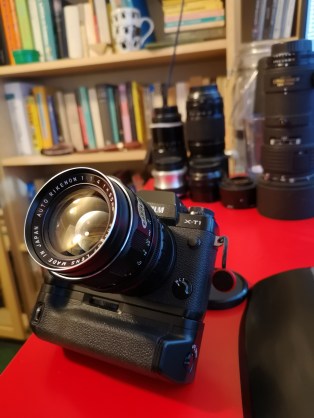 the best I ever felt. Today I used it meanly at an aperture of 1.4 to see the results. You cannot focus really close, around 45 cm from the sensor but at that distance there is not much depth of field. Tomorrow I will try it at other f-stops and from longer distances from the subject.
So far I like what I see, the colors are nice and the sharpens seems good even though it is hard to see on most of these pictures because of the shallow depth of field and the angle I have taken these pictures. I did some more work on these pictures in Lightroom, mainly some highlight work and basic sharpening and contrast, the sun was shining bright and it was the middle of the day so the light was not at it’s best, the colors where already great in my opinion, straight from the sensor.
Continue reading “Fujifilm X-t1, Ricoh Auto Rikenon 55mm f1.4 (M42)”

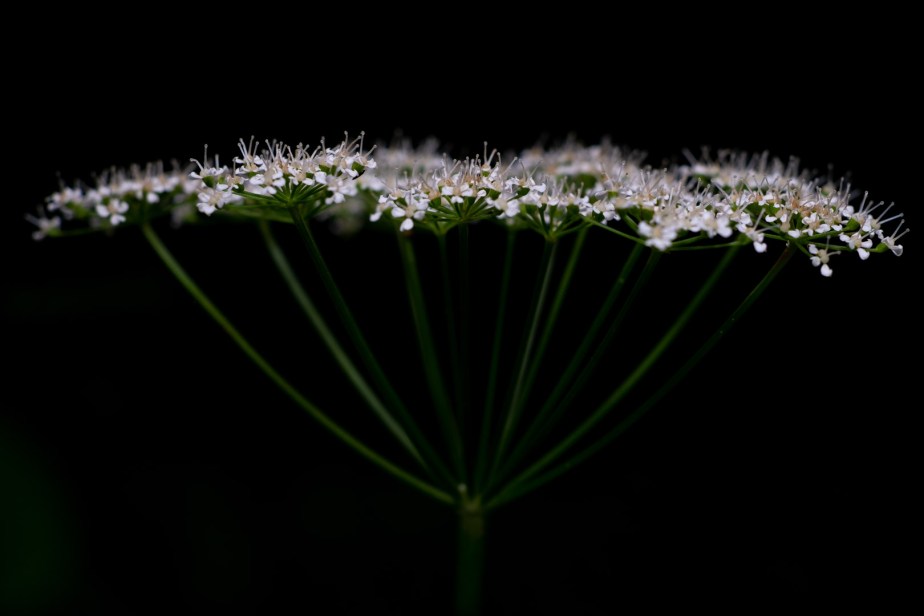
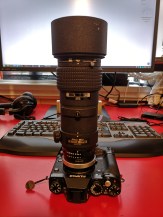 Today I used my 300mm Nikon lens on my X-t1 to try out manual focus with this kind of lens. The X-t1 has this focus aid that shows you a small zoomed in part of the screen besides the main screen and this works great. All the pictures are taken hand held with a shutter time of 500. The pictures of the flower give a nice mood and because of the aperture of f4 only a small sliver is sharp. The picture of Darth, our cat, shows a good sharpness in the eyes and the bridge is sharp to, at least part of it because the aperture was also f4. The butterfly was more difficult to get sharp but that was because of the wind, I shot a burst of pictures and prayed for the best, something a normally never do. Overall manual focusing works fine with this kind of lens.When I use this lens, made between 1987 and 2000, on my Nikon D7100 you can use the autofocus but it is slow, there is no motor in the lens like you have with modern lenses, it’s all mechanical and you notice, and hear it. As long as the subject is not moving to mush and you are not in a hurry it works great. .


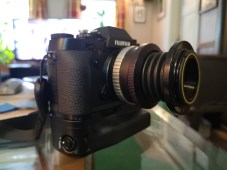
 Today I used the Nikon 50mm and reversed it with a special adapter you screw on the lens where you normally screw on a filter. you can buy these kind of adapters for different camera mounts, in this case I used one for Nikon F-mount. There is off course
  no auto focus and you have to set your aperture manual. Today it was overcast and i set my ISO at 200, the shutter on 1∕180s and the aperture of f2.8. I didn’t change these settings and let the environment decide what the mood of the picture would be. The pictures are JPEG’s straight from the RAW file without any changes, only the one with the insect is slightly sharpened. I personally like the effect of the low depth of field and the lack of sharpness. I shot these pictures handheld and there was some wind, I will test this setup an other day in better conditions whit a tripod to see how sharp the 50mm is reversed.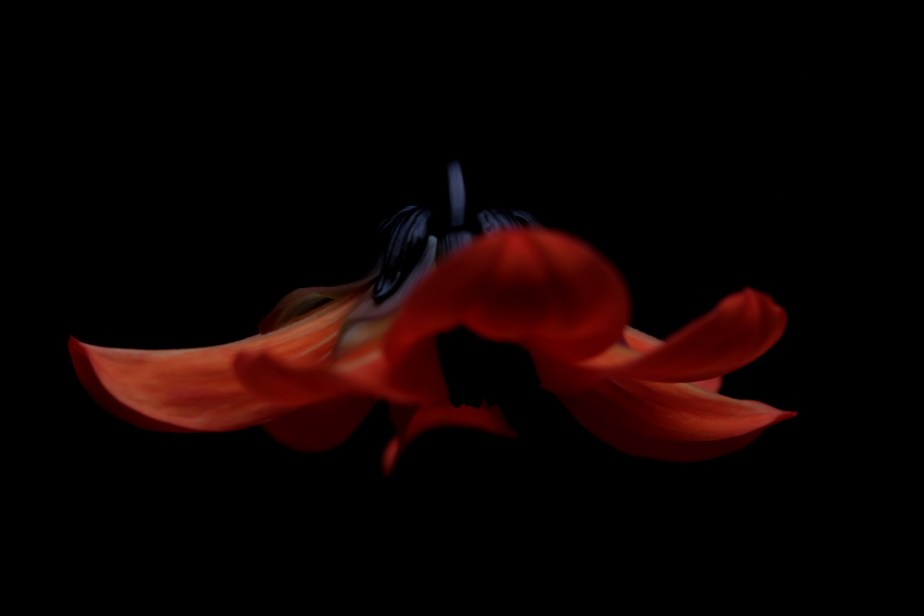


 The shutter was set to 1/250s because i like to shoot without tripod and with the 50mm lens you don’t have to worry to mush. I like to use the view finder and push it against my eye to stabilize the camera even more, your eyes is then like a third arm. If I use the back screen i I like to use the strep from the camera that hangs around my neck as a stabilizer by stretching my arms and put tension on it. I played a little withe the aperture settings, I used settings between 1.8 and 5.6 and I also changed the strength of the flash, most of the time the flash was at its weakest (1∕128) setting.

 I used my 5 year old Fujifilm X-e1 with an adapter so I could use my 50mm 1.8 Nikon lens that I already had in the film days. Because I wanted to take pictures of flowers and insects I used a 36mm extension tube, a little long I know but I want to try it. I have not calculated it, wouldn’t know how to do it, but the magnification is not 1 to 1 like with my dedicated 105mm macro lenses. But I could get close and with an aperture of 2.8 there is only a little area in focus but the background is so smooth that it is almost monotone.
 My photography notebook